The real cost of broadcaster OTT ownership isn’t just the build, it is also the ongoing effort required to keep the service moving.
Joe Foster
The conversation about OTT platform ownership is changing. A few years ago, the question broadcasters were asking was whether to build or buy. The question I hear more often now is different: what does it actually make sense to own?
That shift matters because it means broadcasters are no longer debating the principle of ownership. They are making more deliberate choices about where ownership adds genuine value and where it creates overhead that competes with their ability to grow the business.
The answer I keep coming back to, and the one I think is becoming clearer across the industry, is this: broadcasters should own the audience relationship, the editorial strategy, the brand experience and the public value mission. They do not necessarily need to own every app update, every device expansion, every integration dependency or every piece of platform maintenance required to keep the service running.
That is not a concession. It is a more considered position on where broadcaster teams should direct their energy. It is also about improving their ability to react quickly to changing market dynamics.
Why the original decision made sense
It is worth being clear about this. When many broadcasters decided to build or invest in their own OTT infrastructure, they needed a service that reflected their remit, rather than a generic product built for a different business model. In many cases, the available platform options at the time were limited, and building or owning the platform gave them speed and confidence.
The challenge is that the economics of ownership change once a platform becomes a live service that has to keep evolving. A platform that gave a broadcaster control at launch may be consuming a significant amount of internal capacity by the time it is three or four years old.
Outsourced platform options have also evolved. They now offer much richer feature sets and far more flexibility across design, publishing and service configuration than earlier generations of managed platforms.
The costs that appear after launch
Any model in which the broadcaster carries the burden of maintaining, integrating and evolving the platform should reassess over time. This includes bespoke builds, older agency-built stacks and commercial platforms where the integration and customisation overhead has grown beyond what the team can comfortably absorb.
The maintenance load often looks like this: keeping up with OS and app store changes across web, mobile and ever more connected TV platforms, managing player and video workflow updates, handling payment and entitlement changes, running regression testing across devices, keeping third-party integrations working as vendors update their APIs, and working through the compliance and security obligations that come with any live consumer service. None of these are visible to the audience. Most of them do not appear on a product roadmap. But they consume engineering time, and that time is finite.
Many public and regional broadcasters are expected to serve national-scale audiences, across multiple languages, live events, news, radio, catch-up and archive content, with teams that are not structured like global technology companies. And audience expectations do not account for that difference. A viewer comparing a national broadcaster's streaming app to Netflix is not adjusting their expectations based on the difference in technical resources. The experience either works for them, or it does not.
Ampere Analysis research published in 2024 found that European commercial broadcasters' content budgets fell by 19% between 2016 and 2024, even as their streaming obligations grew significantly over the same period. Broadcasters are being asked to deliver more across their digital services, but the teams behind those services are rarely growing at the same pace. When a meaningful share of technical capacity is absorbed by platform upkeep, something else waits: a product improvement slips into the next sprint, a device launch moves into the next quarter, a new audience feature stays on the roadmap rather than reaching viewers.
The roadmap problem is where ownership costs become most visible
Maintenance and service improvement compete for the same resource and the roadmap for audience-facing improvement gets shorter..
A product-led platform changes this equation. When platform investment is pooled across many customers, capabilities can be delivered as part of the roadmap rather than starting as a bespoke engineering project for each operator. A broadcaster on a well-invested managed platform will often find that new device apps, emerging content formats and integration updates arrive without appearing on their internal engineering plan. The cumulative effect over three to five years is significant. Every improvement that arrives through the platform rather than through an internal project is capacity that can be directed at the service itself.
The broadcasters who are handling this well are not giving up control, rather they are being more precise about where control matters: retaining ownership of what shapes the audience experience and editorial direction, while allowing a product-led platform to carry more of the operational and technical momentum.
What RÚV signals
RÚV, Iceland's national public broadcaster, made a deliberate decision to reduce the amount of platform complexity carried internally, choosing Leyra as the platform to help them do it. That decision reflects something I often hear from broadcasters at a similar point. The platform question becomes less about ownership in principle and more about creating the right conditions for the service to keep improving.
Hrefna Lind Ásgeirsdóttir, Executive Director of Digital Strategy at RÚV, put it in terms that will resonate with a lot of broadcaster teams: "As a public service broadcaster, RÚV must meet the highest standards. At the same time, it is equally important for us to provide viewers with an engaging user experience while keeping costs and complexity under control. Leyra plays an important role in managing parts of our streaming platform and helps us extend our product portfolio as we continue to grow."
For RÚV, the move to a managed platform approach with Leyra helped the team focus more of its energy on what it is there to deliver: a high-quality public service experience for its audience.
Why we built Leyra the way we did
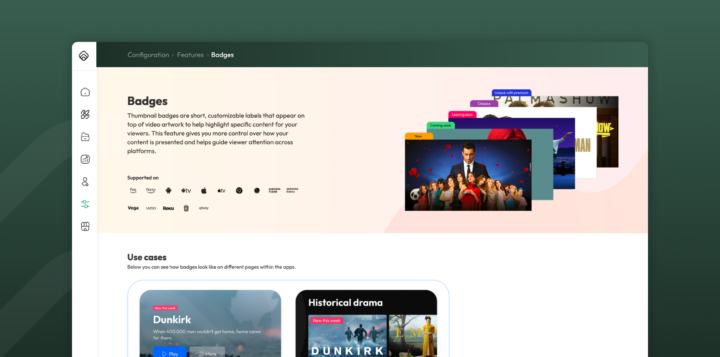
The point is not to remove control from broadcaster teams,it is to reduce the amount of operational effort required to keep the service moving. Leyra brings the core platform components into a connected system, while the marketplace gives operators room to extend and integrate without rebuilding the stack every time the service evolves.
The aim is for the platform to absorb more of the operational overhead, so broadcaster teams can focus on the work that shapes the audience experience. That includes improving content discovery, expanding device reach, developing new formats and growing the service with more confidence.
Broadcasters on Leyra benefit from continuous platform investment as part of the shared roadmap, rather than treating every device expansion, format update or integration change as a separate internal project.
For broadcasters reviewing the cost and complexity of their current OTT setup, IBC 2026 is a good moment to step back and ask what a more managed, product-led approach could look like in practice. We will be in Amsterdam to talk through that question, and to show how Leyra helps broadcaster teams reduce operational overhead while keeping control of the audience experience.
Book a meeting with me and the Leyra team at IBC 2026.