Streaming has overtaken broadcast and cable combined on the television set. Whether that translates into engagement and lifetime value depends on how seriously the TV app is treated as its own product.
The Leyra Team
Streaming accounted for 48.6% of total US television viewing in May 2026, according to Nielsen’s The Gauge, having first overtaken broadcast and cable combined a year earlier. The big screen is no longer a secondary part of the streaming experience. It has become one of the most important places for operators to get that experience right.
As viewing has shifted, the role of the TV app has changed with it. The television is not simply another endpoint for the same experience. It has its own patterns of navigation, discovery and viewing, and should be treated as a product in its own right.
The big screen is not a smaller version of the app
A phone is held, tapped and scrolled by one person making fast decisions. A TV is watched from a sofa, navigated with a remote and often shared across a household with multiple profiles. Text entry is slower. Touch gestures do not exist. The viewer is also sitting several feet away from the interface rather than holding it in their hand.
These differences shape what good product design looks like.
A homepage needs to work with directional navigation. Sign-in and account journeys need to be simple to complete with a remote. Discovery needs to feel natural on a screen where viewers are often settling in for longer viewing sessions.
Treating TV as a first-class product means designing around those behaviours rather than simply adapting a mobile or web experience for a larger screen.
Operating across TV platforms
The challenge is not only the interface. It is also the number of environments operators need to support. Samsung Tizen, LG webOS, Roku, Amazon Fire TV, Android TV and other television platforms each come with their own technical requirements, app distribution processes and device behaviours. As the device portfolio grows, so does the work involved in keeping the experience consistent and up to date.
For product teams, that can mean coordinating content, layouts and releases across web, mobile and multiple TV platforms at the same time. The more of that work that can be managed centrally, the easier it becomes to keep the experience moving at the pace viewers expect.
Why this matters for engagement and retention
The operational side of connected TV can feel removed from the commercial measures operators care about, but the two are closely connected.
The easier it is to update what viewers see, the easier it becomes to respond to a major content launch, surface something that is performing well or improve a journey where viewers are dropping out. Discovery, personalisation and merchandising only create value if teams can actually use them at the pace the service requires.
For the viewer, the result should simply be a TV experience that makes it easier to find something worth watching and come back to the service next time.
For the operator, that creates more opportunities to turn time on the big screen into deeper engagement and, ultimately, stronger retention.
Making CTV easier to operate
Leyra supports native apps across major TV platforms including Samsung Tizen, LG webOS, Android TV, Amazon Fire TV, Roku and Apple tvOS, while giving teams central control over app layout, page structure and content programming across platforms.
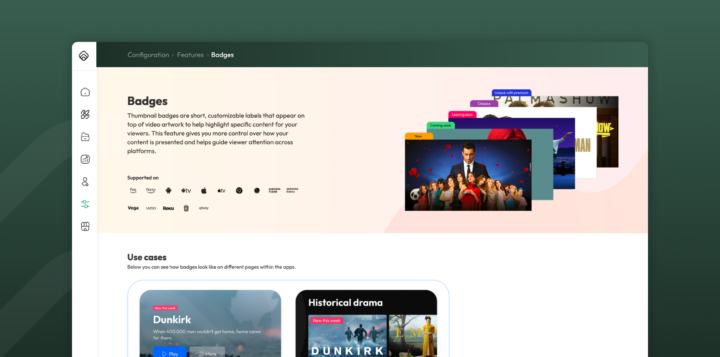
Teams can update layouts, programming and featured content without a new code release, helping them keep the TV experience aligned with web and mobile without turning every routine change into a separate development project.
Content curation, entitlement, localisation and analytics for the TV experience are managed within the same Leyra platform as web and mobile, giving teams a more joined-up way to operate the service across screens.
Through the Leyra Marketplace, operators can also add new capabilities and specialist services as their requirements evolve, without rebuilding the underlying platform.
The aim is simple: to make the TV experience easier to operate at the same pace as the rest of the streaming service.
The television has become one of the most important places where viewers decide what to watch and settle in to watch it. Operators who treat that screen as a first-class product, with an experience designed for TV and an operating model that makes it easier to improve, are better positioned to turn the continued growth of streaming on the big screen into stronger engagement and longer-lasting customer relationships.
If you are looking at how to improve your connected TV experience or make it easier to manage apps across multiple platforms, book a demo with Leyra. We can talk through your current device strategy, where operational complexity is slowing you down and how Leyra could support the service.
You can also download the full Leyra feature specifications to explore Leyra’s app management, device support and wider platform capabilities in more detail.
Follow Leyra on LinkedIn for more insights on building, growing and evolving streaming services.