Three days of conversations in Lisbon left me more convinced than ever that the streaming trends 2026 are being shaped more by operational challenges than by technology itself.
By Matthew Wilkinson
What StreamTV Lisbon told us about where streaming is actually heading.
Three days of conversations in Lisbon left me more convinced than ever that the industry's biggest challenges right now are operational, not technological.
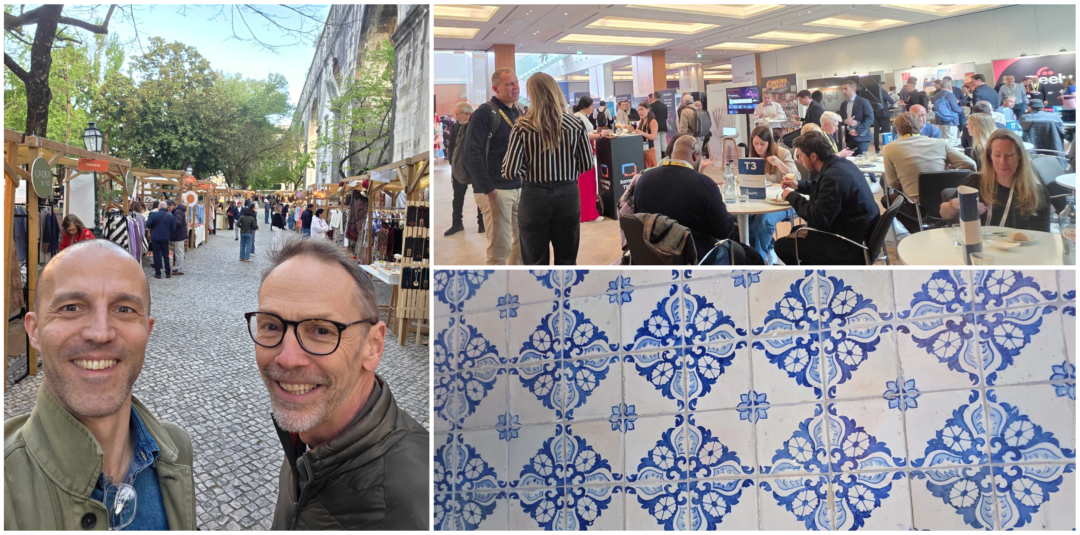
StreamTV Show landed in Lisbon for its first European edition in April, and the timing felt right. The market here looks different from the US in ways that matter. Higher co-viewing rates, more language complexity, a patchwork of Smart TV operating systems, and a FAST ecosystem that is still working out how to make money. The conversations reflected all of that.
I came away from Lisbon with a clearer sense of a few tensions the industry is navigating right now. What follows is my honest read on what kept coming up, and what I think it signals.
FAST is scaling. Revenue is not.
FAST came up constantly, and almost always in the same breath as monetisation anxiety. Supply is outpacing ad demand in Europe in a way that is becoming harder to ignore. Channels are multiplying. Inventory is growing. But the ad revenue has not kept pace, and the result is a lot of operators running FAST at a scale that does not yet make financial sense.
The framing I kept hearing was that FAST works when it is treated as a long-term strategic model rather than a quick distribution play. That sounds obvious written down, but in practice it means a lot of operators are running channels without the operational infrastructure to manage them effectively over time. Discoverability remains a real problem. A channel that nobody surfaces is a channel that nobody watches, and that affects whether the ad model ever works.
The more interesting dynamic is what is happening at the edges of the FAST ecosystem. VOD platforms are entering FAST distribution. FAST channels are experimenting with D2C. Everyone, it seems, is trying to find a route into Amazon. Each of these moves makes strategic sense on its own terms, but the challenge that kept coming up in conversations was operational: most companies do not have the expertise to execute across all of these simultaneously, and the risk of spreading too thin is real.
The home screen is the new battleground
Denis Ostir from VIDAA put it plainly during his panel: if you are not in the top five globally or the top three locally on a given Smart TV OS, you are going to struggle. That is a harder statement to brush off than it sounds.
The Smart TV OS landscape in Europe is more fragmented than it was two years ago. VIDAA has taken meaningful market share, and that is a good thing in terms of consumer choice. But for streaming operators, it means the matrix of integrations required to maintain distribution is growing. Tizen, webOS, Android TV, Roku, HbbTV, and now VIDAA covering 180-plus countries all require distinct treatment. Getting an app onto a platform is one thing. Getting it surfaced prominently, embedded at firmware level where possible, and properly integrated with the OS editorial layer is a different and more complex challenge.
The practical implication is that app-layer presence alone is no longer enough. The OS partnerships have become the distribution strategy. That shifts where investment and effort need to go, and it puts pressure on operators who have been thinking about platform primarily in terms of feature coverage rather than ecosystem positioning.
The creator question is becoming a rights question
One of the more interesting threads in Lisbon was the conversation around creators and what their growing role in live and sports content means for traditional media companies.
YouTube has built a long tail of commentators and personalities who now have genuine audiences in sports and live content. Studios and rights holders are watching this closely because those audiences are real and engaged in ways that linear viewership increasingly is not. Netflix and TF1 are commissioning from creators. The distinction between digital and traditional talent pipelines is fading.
The question this raises for media companies is less about whether to engage with creators and more about where they sit in rights structures going forward. The next prominent football pundit may not come from within a broadcaster. They may have built their audience on YouTube and arrive at the negotiating table with leverage that reflects that. How rights deals, exclusivity windows, and distribution arrangements account for that shift is still being worked out.
Operations keeps coming up
Across all the conversations about technology, the theme that surfaced most consistently was operations. Customers do not fail because the technology does not work. They struggle because running a streaming service at any meaningful scale is genuinely hard: editorial curation, ad operations, 24/7 programming, localisation, metadata management. These are not glamorous problems, but they are the ones that determine whether a service performs.
BBC Studios made a point about metadata that stuck with me. It is highly undervalued, and most operators neglect it during onboarding. But enriched tagging drives home screen placement, personalisation, and viewer conversion in ways that are directly measurable. When operators do not treat metadata as a priority from the start, they build in a disadvantage that compounds over time.
The same applies to the ROI conversation. Several conversations touched on the pressure customers face from their own stakeholders to demonstrate performance. Views, click-through rates, conversion rates, revenue attribution. Operators need to show that their streaming service is working, and they need to show it to internal stakeholders who do not necessarily have deep streaming literacy. Having the data in a form that supports that kind of reporting is not a nice-to-have.
What this adds up to
The technology barriers in streaming are lower than they were five years ago. What separates services that are growing from those that are plateauing is increasingly about operational depth: the ability to manage distribution across a more complex OS landscape, run FAST channels with the consistency and discipline that monetisation requires, and build the kind of metadata and analytics infrastructure that actually influences performance.
That is what we are focused on at Leyra. The platform is built to support the full operational reality of running a streaming service, not just the launch moment. That means giving teams real visibility into how their service is performing, the ability to act on that without long development cycles, and enough flexibility to evolve their approach as the market shifts.
Lisbon reinforced something we hear from customers regularly: the platform underneath a service either makes those things easier or it makes them harder. Over time, that difference shows up in whether a service is improving or stalling.
It was a good few days. I am already thinking about what the conversation will look like at the next one.