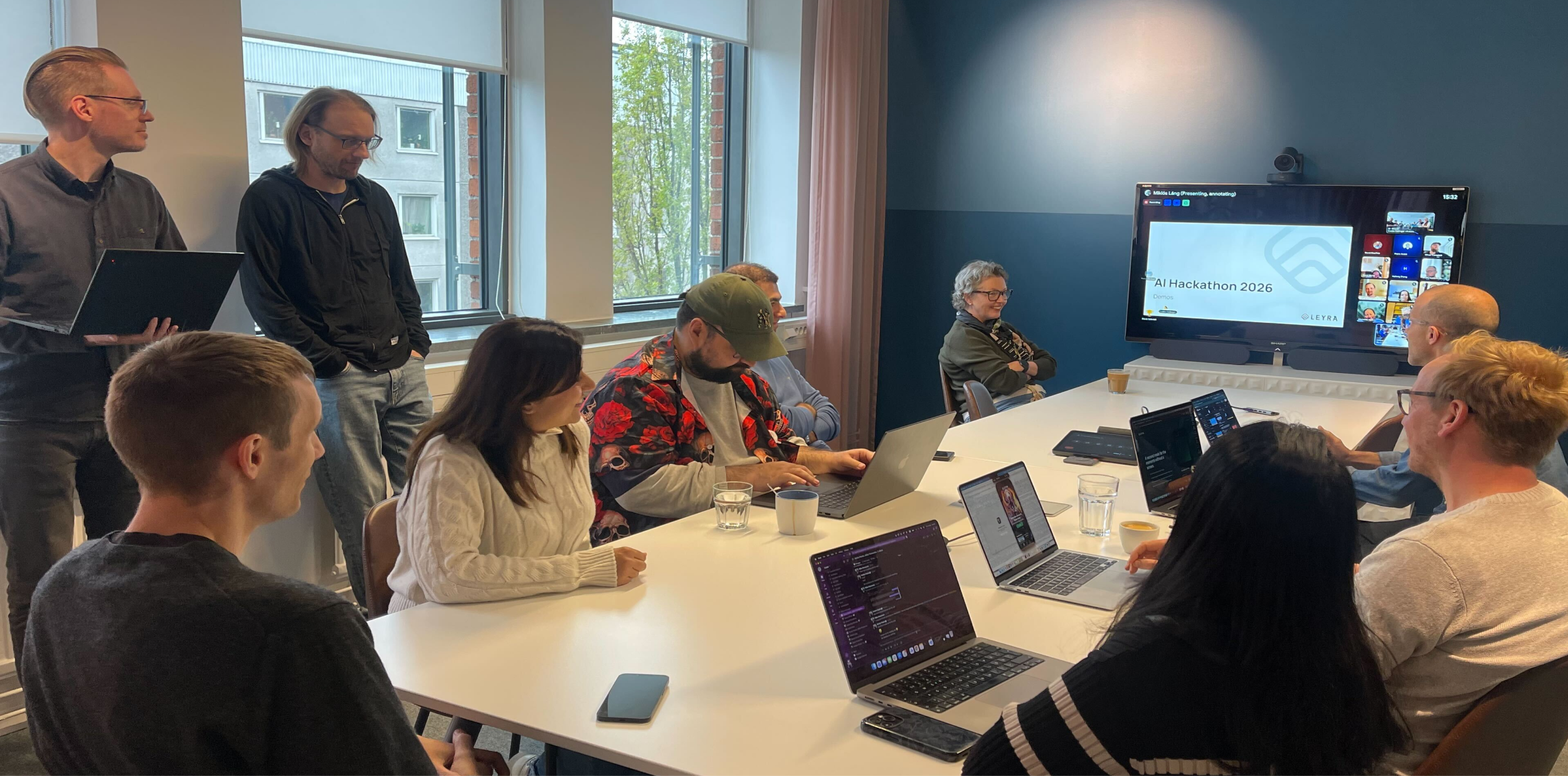
It had been a while since our last respective hackathons, so it was time to organise another one - Leyra Labs - and for the first time, as a joint company. Hackathons are always a great initiative: they give us the time and space to be creative, experiment with new ideas and strategies, foster teamwork with colleagues we might not usually work with day to day, and above all: have fun with it all.
The theme for the Spring 2026 Leyra Labs event was clear from the start. As a company, we have been looking for some time to make greater use of AI tools to speed up our workflows, automate more routine tasks, and make working life more efficient. But, as with any emerging technology, there is a learning curve - knowing when to use AI, and how to use it well.
So, the only rule for the day was: use AI.
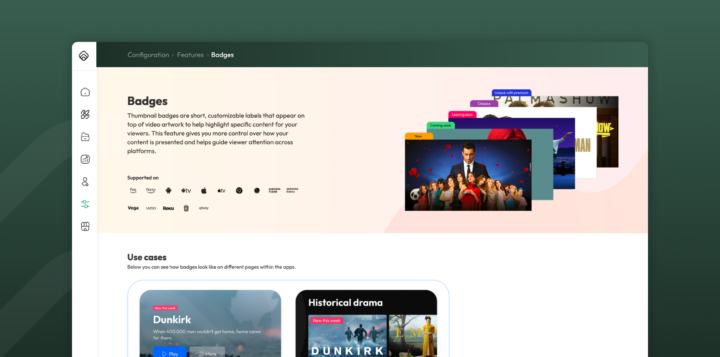
Teams formed quickly, with diverse ideas for Claude (and other AI tools) automation emerging from across the company. Customer success managers explored ways to automate release notes, product developers experimented with building new features, and others looked at using AI to help troubleshoot issues or tackle specific use cases.
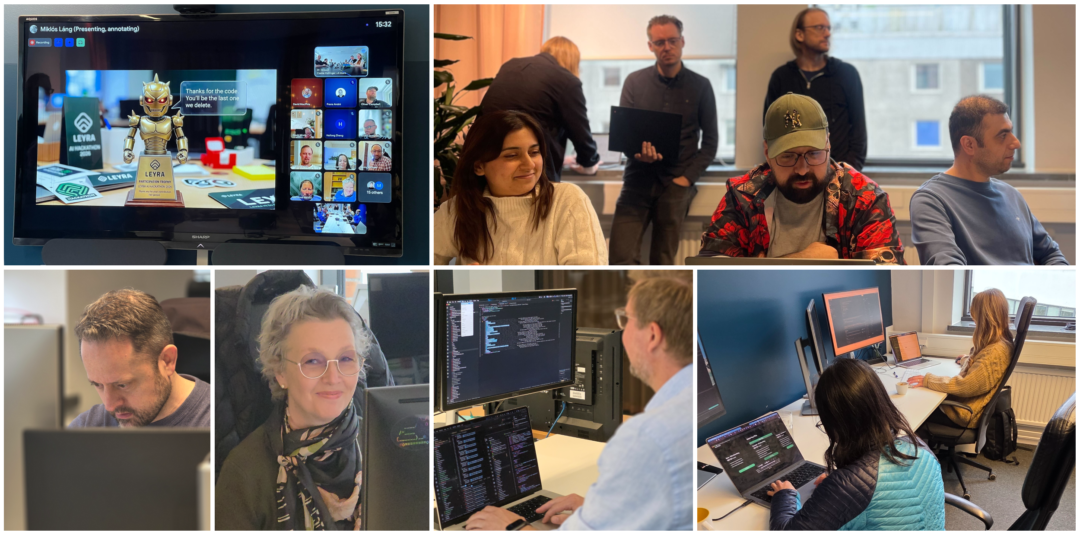
As a globally distributed team, we are used to working both remotely and in person - and Leyra Labs was no exception. Animated in-office discussions alternated with Google Meet calls and Slack conversations throughout the two days.
And the result?
After two days of experimenting, prompting, celebrating successes, and (occasionally) despairing, it was inspiring to see what can be achieved with the help of AI. One team built an entire app suite, while another created an automated invoicing workflow. Other teams presented product improvements that solved real, tangible issues.
"Never worry about results from others, just do your part and trust your teammates to do theirs. They often will surprise you." - Rami Baarah, Web Team Lead, Leyra
Some of our takeaways from two days of uninterrupted Claude focus:
-
- Prompting matters more than you might expect. Claude is incredibly powerful, but its output is only as good as the prompts you give it. If you are unclear about what you want, Claude will try to fill in the gaps - and you may end up spending a lot of time trying to reel it back in.
- Watch out for unintended side effects. AI is not always aware of the downstream consequences of changes. You need to try to anticipate side effects in advance and factor them into your prompts where possible.
- Technical skills still matter at depth. For more complex automation, you do need technical expertise to arrive at a scalable, lasting solution. That said, Claude does a lot of the legwork in getting you there and showing you what is possible.
- Keep an eye on your tokens. More advanced models like Opus are more powerful but also more expensive - and you may find yourself running out of credits at a critical moment.
We all enjoyed our date with Claude, and are keen to keep developing both our individual skills and the AI workflows we use day to day. The sky (or our credit allocation) is the limit.